



If your company handles orders by email, phone and spreadsheets, you have probably wondered whether it is time to move to a portal. It is a fair question, because B2B portal development is an investment that takes both time and money. On the other hand, a well-built solution can save hours every week and reduce costly mistakes.
In this article I go through what the costs consist of, what benefits you can expect and how to assess whether the investment is worth it for your company. I write as a software consultant working from Seinäjoki, so the examples are based on practical work with businesses.
What Is a B2B Portal and Who Is It For?
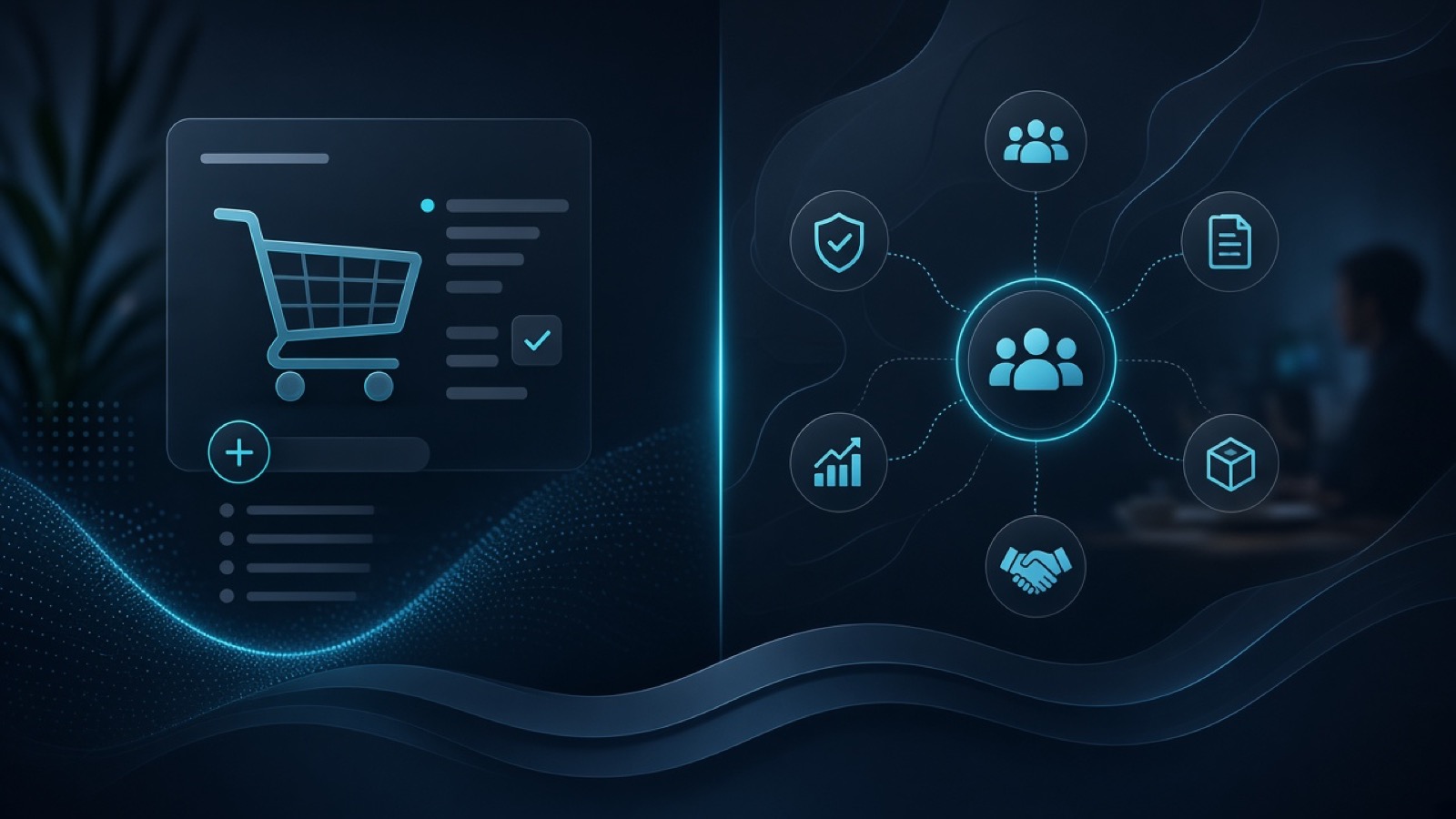
A B2B portal is a secure web service through which customers and partners handle ordering and other business themselves. It can include a B2B online store, where products are ordered at contract prices, but a portal can also contain invoices, order history, materials and support. If you sell through resellers or distributors, you can build a separate partner portal where they find price lists, product data and training materials.
A portal is especially suitable for companies that have recurring orders, customer-specific prices or a lot of customer service work caused by simple questions.
What Do the Costs of B2B Portal Development Consist Of?
The price is not a single number but the sum of several factors. Once you understand these factors, you can compare quotes and define the scope sensibly.
Scope and Features
The more features you need, the more work there is. A basic version can include login, a product catalog and ordering. A broader solution adds quote flows, invoices, order history and reports.
Integrations with ERP and CRM Systems
A portal is most useful when data flows automatically between ERP, CRM and inventory systems. Integrations raise the cost, but they remove double entry, which is often the biggest source of savings.
Users, Roles and Approval Chains
If different people use the portal with different permissions, roles and approval processes must be planned carefully. This adds work, but it protects confidential prices and contracts.
Design and User Experience
The portal must be easy to use, otherwise customers go back to email. A good interface takes design work, but it reduces the need for support and speeds up adoption.
Security and Maintenance
A portal handles prices, orders and personal data, so security and GDPR must be taken into account from the start. Reserve budget for maintenance and further development after launch too, because B2B portal development does not end at launch.
What Benefits Does a B2B Portal Bring?
You Save Time in Order Handling
When the customer places the order themselves, your team does not have to key it in by hand. The time is freed up for sales and for helping customers with more demanding matters.
Fewer Errors and Complaints
When prices, product data and stock levels come directly from your systems, the risk of wrong information drops. Mistakes are rarely free, so this benefit often shows quickly.
A Better Customer Experience
The customer can order whenever it suits them, see their own order history and repeat earlier orders quickly. Many buyers find this smoother than email threads and phone calls.
Information Up to Date in One Place
Price lists, materials and product data are updated once and become visible to every authorized user. This is especially valuable in a partner portal, where information is shared with several resellers.
How Do You Calculate Payback?
Estimating payback is simpler than many people think. First calculate what your current way of working costs, and compare it with the costs of the portal.
Use this list:
- How many orders do you handle per month, and how long does handling one take?
- How many errors occur, and what do they cost (returns, credits, working time)?
- How much customer service time goes to simple questions?
- What do portal development and maintenance cost per year?
A fictional example: A company handles 200 orders a month, and handling one order by hand takes 15 minutes. If a portal cuts this by half, the saving is about 25 hours a month (200 × 7.5 min). Multiply this by your hourly cost and add the savings from fewer errors to get an estimate of the monthly benefit. The numbers in the example are illustrative, and your own calculation depends on your own volumes.
When Is a Portal Not Worth It Yet?
The honest answer is that a portal does not suit everyone right away. If orders are few, needs are simple and you have only a handful of customers, a lighter solution may be enough. In that case it makes sense to start with a smaller B2B online store and expand only when volume and needs grow. Properly phased B2B portal development lets you start small and grow the solution as needed.
How to Start Sensibly
- Map your current processes. Find out where time is spent and where errors occur.
- Define the first version. Choose the features that bring the most benefit right away.
- Decide on integrations. Think about which systems must be connected in the first phase.
- Request a quote and compare the whole package. See what is included in the price and what is not.
- Pilot with a few customers. Collect feedback before a wider rollout.
Summary
B2B portal development is worth it when your current way of ordering and serving customers consumes time, causes errors or slows growth. Start by calculating your current costs, define the first version sensibly and grow the solution as needed.